Most Scuffed Golf
Guiding question
How does a game get its own handmade identity when it currently looks generic and AI-generated?
Summary
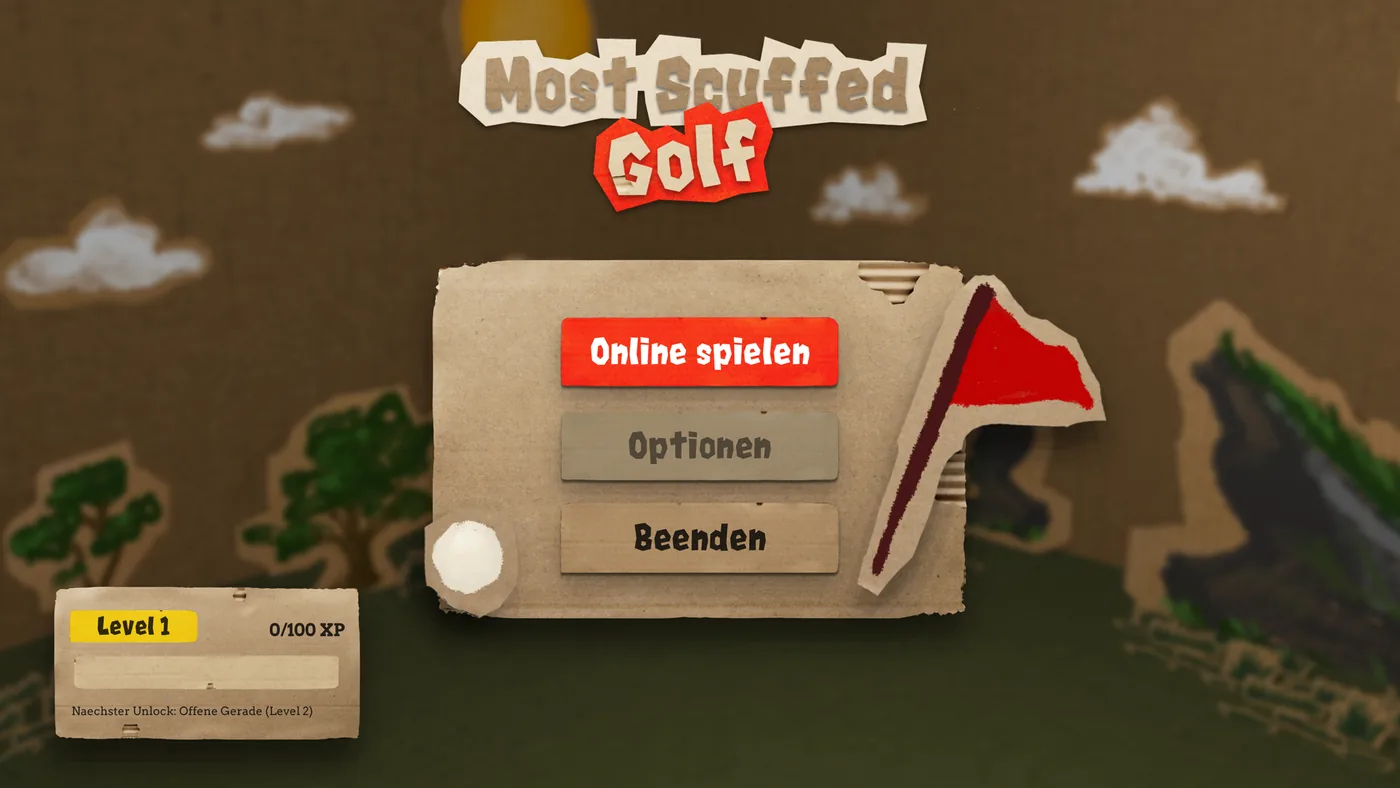
Most Scuffed Golf is a multiplayer mini-golf game: before each hole, every player adds a piece of the course, then everyone plays through the chaos they built together. It’s developed by German streamer Rumathra (Wieland Welte) and set to launch in October 2026. The 3D world looks like it’s built from cardboard, but the interface felt generic and AI-generated. I designed every screen and carried the cardboard style through the UI, the map illustrations and the ball skins, so the whole game feels like it was made by one hand.
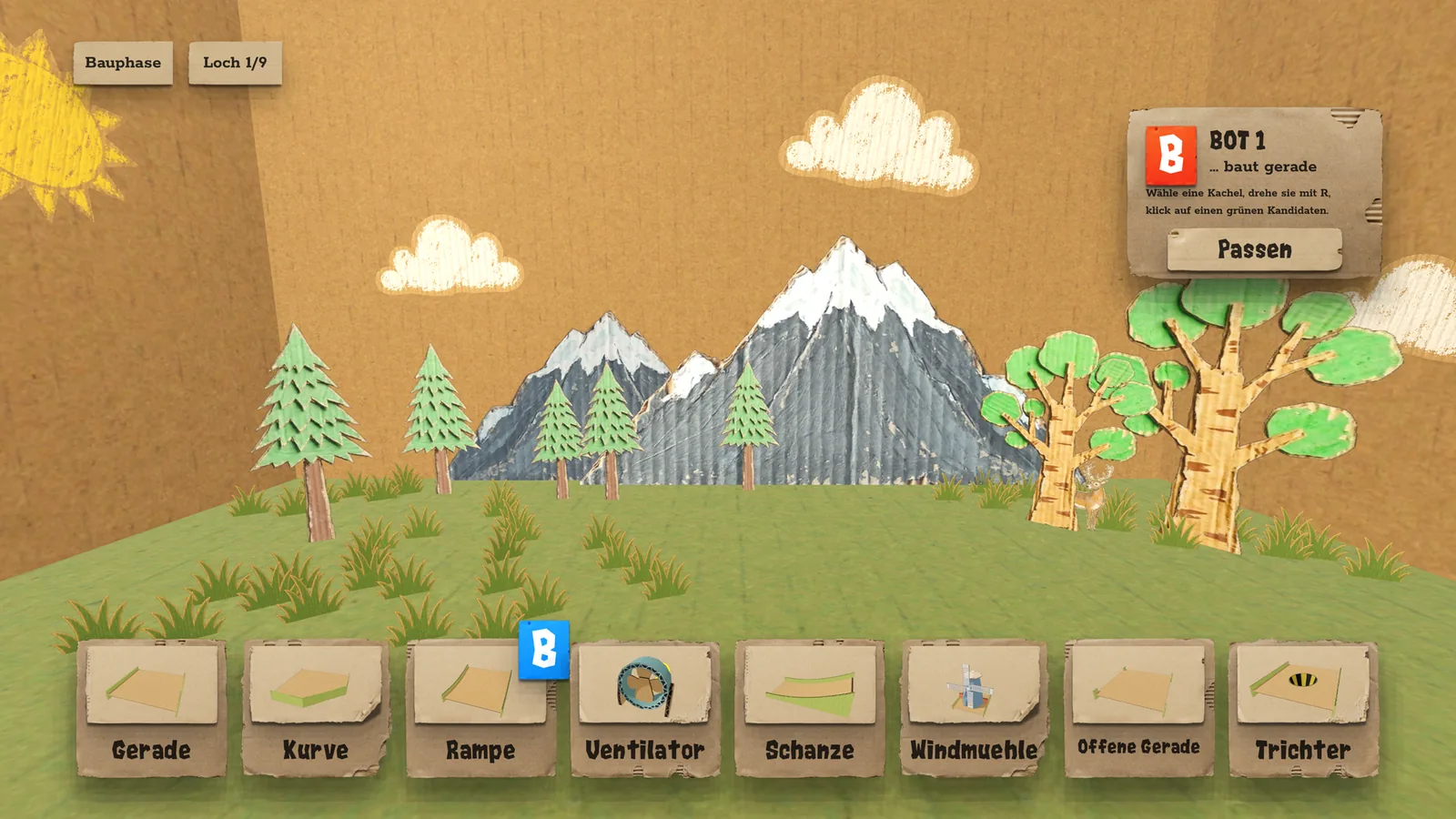
The starting point
The world of Most Scuffed Golf is made of cardboard, but the interface didn’t match. To the community, the game looked AI-generated and lacked its own taste. For an indie game competing with thousands of titles on Steam, and followed live by a streaming community, that’s a real problem. The brief: give the game a distinctive, believable character.
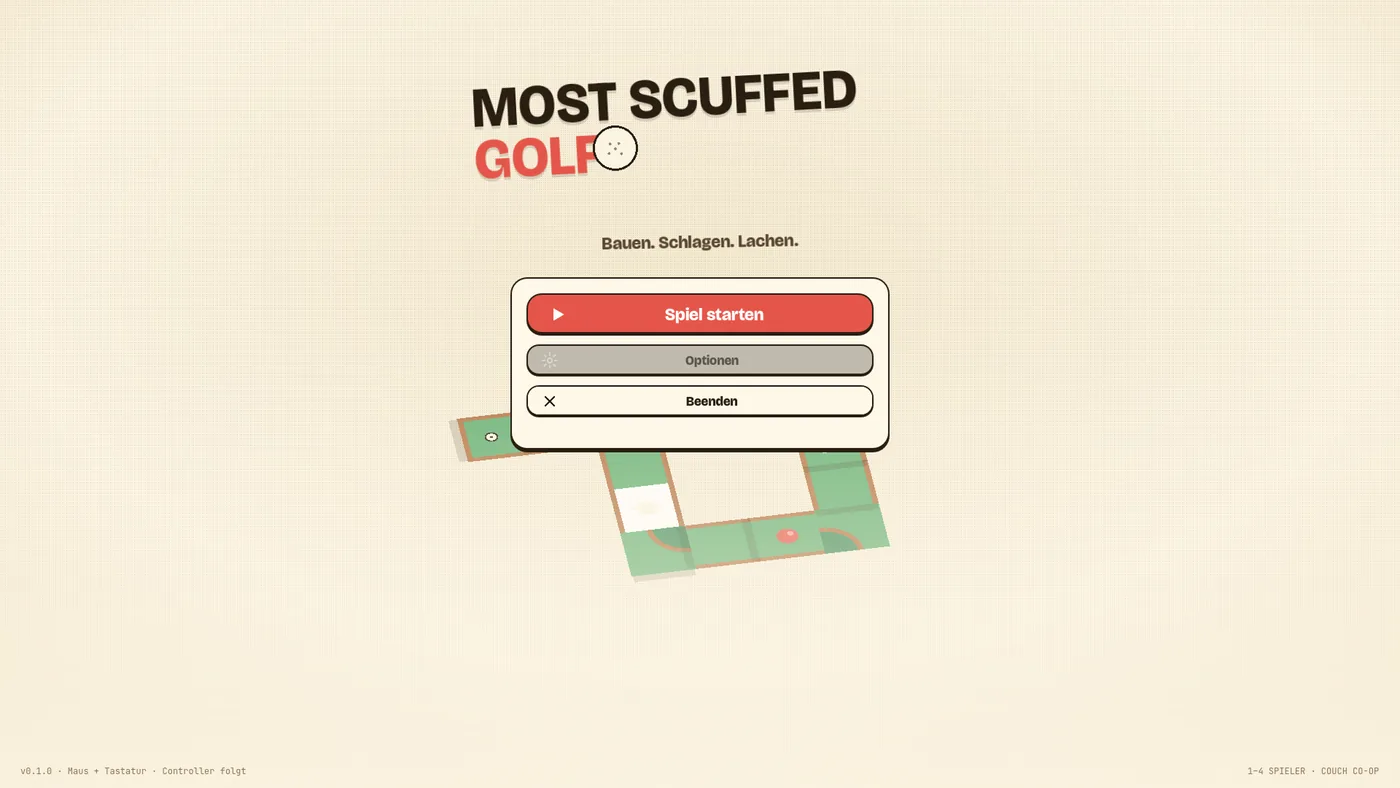
Material study: cardboard as the guiding motif
Rather than inventing a new style, I built on what the game already had. In a material study I examined what makes cardboard look like cardboard: edges, folds, layers, tape, wear. This turned into moodboards and design rules for every element in the game, from buttons to the course.
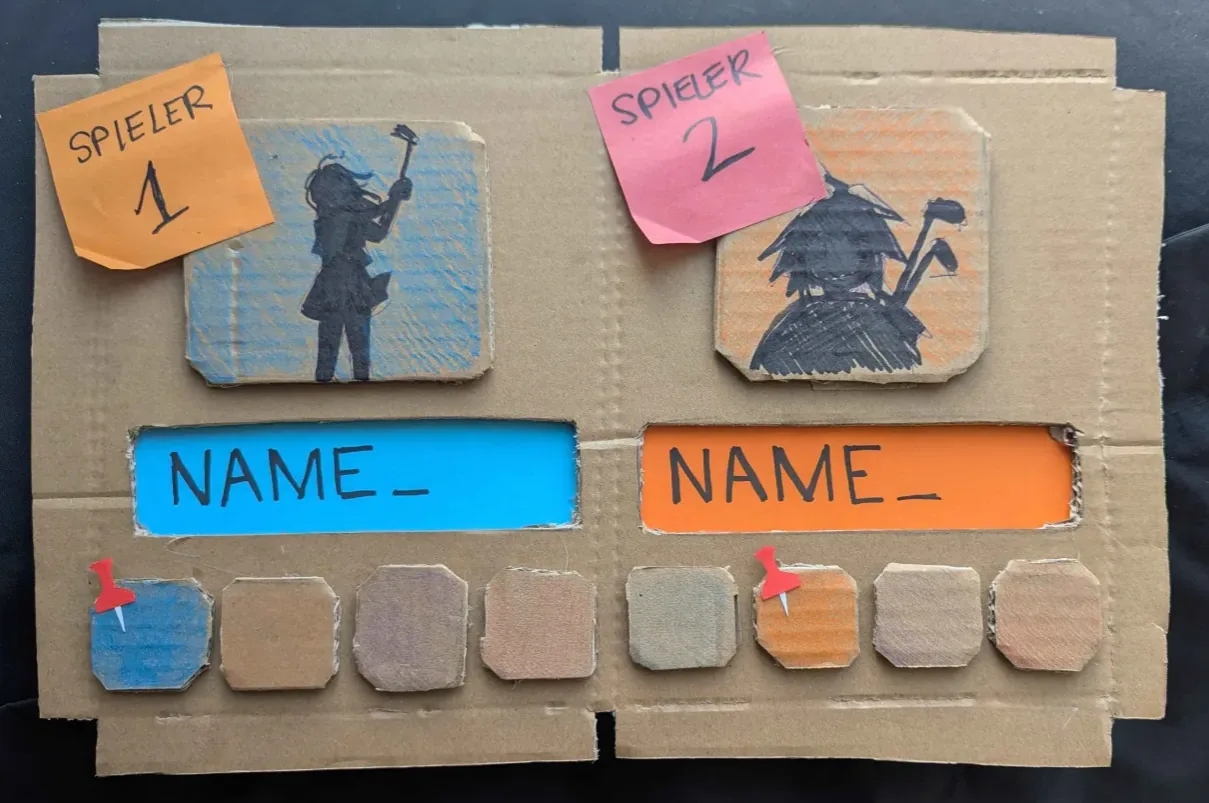
Every screen, one style
Building on Tobias Wallisch’s design system, I designed every screen in the game. In Photoshop I created textured panels, buttons and frames that look cut out and glued on.
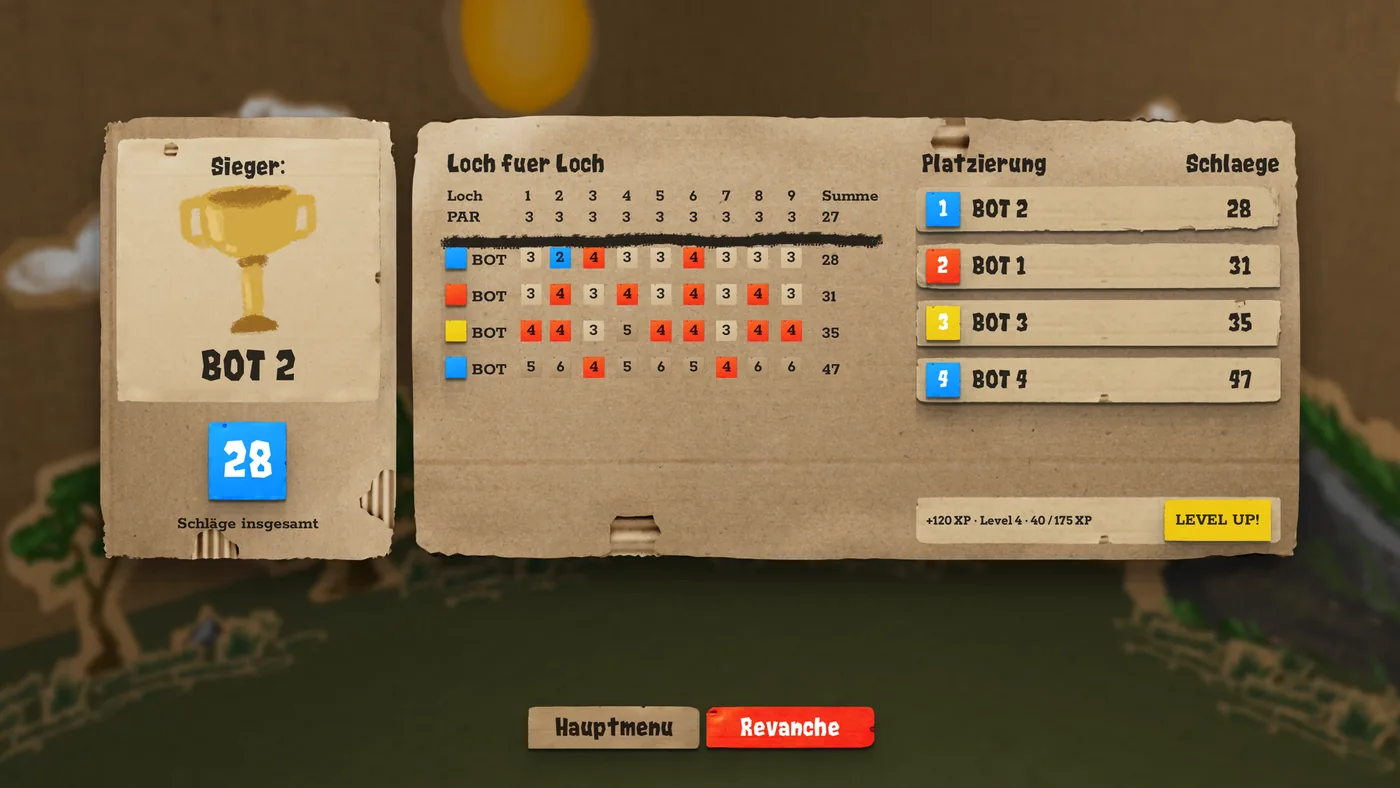
Illustrations: map and ball skins
I also drew the illustrations for the map design and the ball skins. To make sure they really work in the game, I brought them onto the 3D objects in Blender: UV unwrapping for the balls, and shading tests to see how the map illustrations look under the game’s lighting. Now the interface, the course and the in-game objects speak the same language as the 3D assets.
Team, role and learnings
Wieland Welte developed the game, another artist built the 3D assets, Tobias Wallisch created the design system, and Mark Mayer rendered the assets and implemented the UI in the game. My part was ideation, the material study, designing every screen, and the illustrations for maps and ball skins.
It was my first project for a real client, with deadlines and people I hadn’t worked with before. Above all I learned to work efficiently and respond precisely to what the client needs. I took my Photoshop skills much further and picked up Blender for the ball skins. The collaboration is ongoing, and the game is already available to pre-order on Steam.
Key data
- Client
- Rumathra (Wieland Welte), developer · Publisher: W Studios
- Period
- Since summer 2026, main phase approx. 3–4 months, ongoing
- Team
- Developer, 3D artist, design system (Tobias Wallisch), implementation (Mark Mayer), UI & illustration (me)
- My role
- Concept, material study, all screens, map & ball-skin illustration
- Tools
- Photoshop, Blender (UV unwrapping, shading)
- Status
- Release Q1 2027
- Pre-order
- Pre-order on Steam